
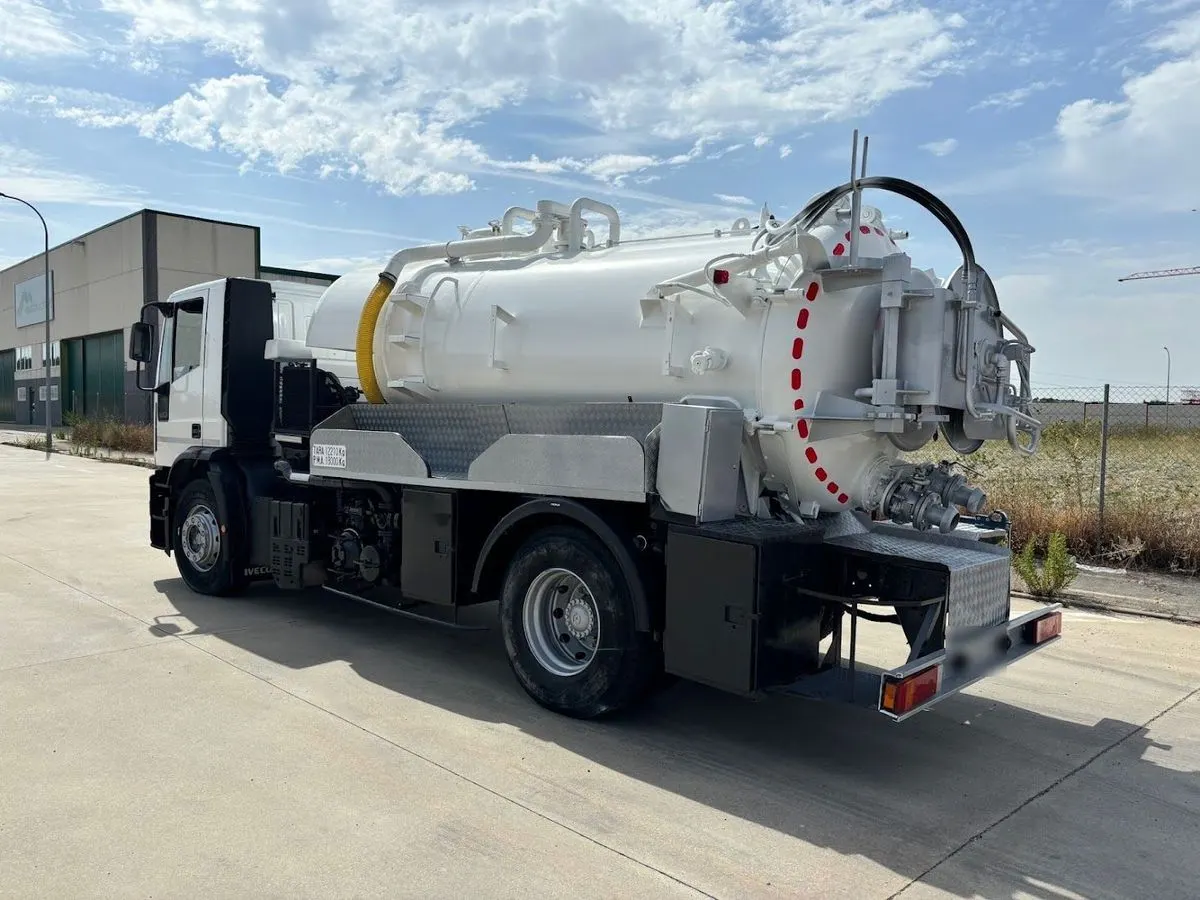
In a professional kitchen, grease is public enemy number one for the pipes. At Limpiezas y Desatascos Campos we clean grease traps in Mallorca for restaurants, hotels, bars, school kitchens and care homes. We empty the separator, remove the grease and solids and leave the trap ready to keep working.
What a grease trap is and why it needs cleaning
A grease trap (also called a grease separator or grease interceptor) is a tank fitted between the kitchen and the main drain. Water from sinks and dishwashers flows into the trap, cools down and sits for a moment. Grease, which is lighter than water, rises and stays at the top. Food scraps sink to the bottom. Only water passes out through the outlet.
The trouble is that the trap gradually fills up. When the layer of grease gets too thick, the trap stops separating and the grease passes into the pipe, where it cools, sticks to the walls and ends up forming a blockage. That's why it has to be emptied and cleaned regularly.
How often to clean a restaurant's grease separator
It depends on how busy the kitchen is and the size of the trap. As a guide:
- High-volume restaurants, fried food or group catering: every few weeks.
- Restaurants and bars with moderate activity: every one to three months.
- Small or seasonal kitchens: at least before and after the season.
A widely used rule of thumb: clean it before the grease and solids take up around a quarter of the trap's volume. If you don't know how often yours needs doing, we'll see what state it's in on the first clean and recommend a frequency.
Regular maintenance for hotels and restaurants
The cheapest way to avoid problems is not to wait for the trap to fill up. With regular maintenance we schedule visits based on how much your kitchen is used and take care of reminding you.
In high season, when hotels and restaurants on the coast are working flat out, the trap fills up much faster. So we adjust the frequency: more visits in summer and fewer in winter. And if something blocks in the middle of service, we're available 24 hours.
There's more information about contracts and invoicing on our service for hotels and restaurants page.
What happens if it isn't cleaned (blockages, smells, fines)
A grease trap without maintenance ends up causing three kinds of problem:
- Blockages: the grease passes into the pipe and sets solid. The sink stops draining just when you're at your busiest, and sometimes water comes up through the kitchen floor drains.
- Smells: built-up grease ferments and smells awful. In a restaurant, that smell reaches the dining room and the terrace.
- Fines: municipal discharge by-laws limit how much grease can reach the sewers. If the trap isn't working and grease gets into the network, the town council can fine the business.
Cleaning it in time costs far less than any of those three. If you already have the problem, we'll clear the pipe and leave the trap clean on the same visit.
Frequently asked questions about grease traps
Can you come outside the restaurant's opening hours?
Yes. We usually do it before you open or after you close, so we don't clash with service. Tell us which times suit you best.
What do you do with the grease you remove?
We take it away in the truck to an authorised treatment plant. It doesn't go into the sewer or the bin.
Do you also clean the kitchen pipe leading to the trap?
Yes. If the pipe running into the trap is clogged with grease, we clear it by jetting on the same visit.
My premises don't have a grease trap. Do I need one?
If you have a professional kitchen, you very probably do, and many town councils require one. Check with your town council or with whoever handled your business activity licence.